
We’ve all seen fire protection equipment dotted around our workplaces, educational facilities, and even local businesses.
But how many people can say they actually know how to use them – and could in an emergency?
If you’re not sure how to operate a fire extinguisher, it could be in your best interests to learn. Here are a few helpful tips that could end up preventing significant damage in a fire.
Fire Extinguisher Types
Before learning how to operate a fire extinguisher, it can be helpful to understand what types exist in Australia.
Having that small amount of extra knowledge could mean you know how to operate the correct fire extinguisher in the right situation.
While there are five primary fire extinguishers you will likely see in different environments, there are actually eight in total. This is because, regarding dry powder extinguishers, there is more than one type.
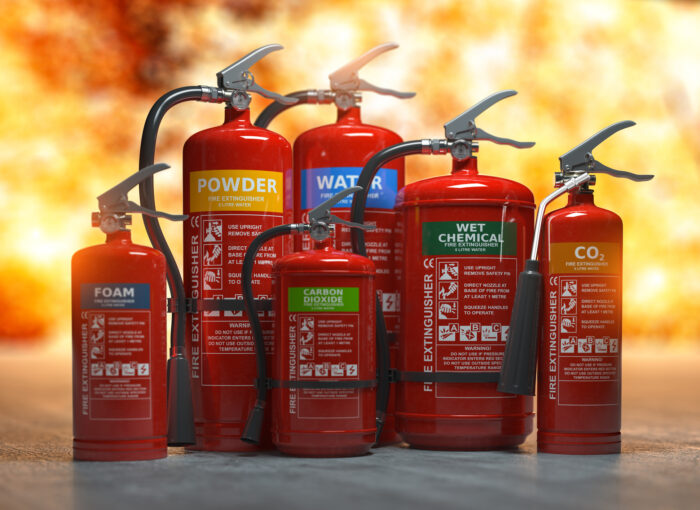
You will likely see the following types:
- Water
- Dry powder (standard and high performance)
- Foam
- Wet chemical
- Carbon dioxide
None of these extinguishers is a ‘one size fits all’ type, which means you cannot use one single extinguisher to put out all fire types.
What Fire Extinguishers Can You Use for Which Fires?
Knowing that the fire extinguisher you pick up to put out a fire may not work, it’s helpful to know which one you can reach for when a particular type of fire has broken out.
Class A
Class A fires are those involving combustible materials like fabric, wood, paper, and flammable solids. You can use a water, foam, dry powder, or wet chemical fire extinguisher to put them out.
Class B
Flammable liquids like paint, turpentine, and petrol cause class B fires, which can be put out with foam, carbon dioxide, and dry powder fire extinguishers.
Class C
If your fire has been caused by flammable gases, such as butane or methane, reach for a dry powder fire extinguisher.
Class D
Flammable metals like lithium will respond to dry powder fire extinguishers.
Electrical
Electrical fires can be put out with dry powder and carbon dioxide fire extinguishers. However, once the electrical item has been removed, the fire type can change class and may respond to other fire extinguisher types.
Class F
Any fires caused by cooking oils will respond to wet chemical fire extinguishers only.
How to Use Your Fire Extinguisher
If the worst should happen and you end up with a fire, act fast. These four steps below are how to use a fire extinguisher.
- Pull the pin at the top of the fire extinguisher. Test it by pointing it away from yourself to make sure it works and to determine how far it sprays.
- Aim the fire extinguisher at the fire, with the nozzle towards the fire’s base.
- Squeeze the handle to release the extinguishing material. Release the handle to stop it.
- Move the extinguisher nozzle from side to side at the base of the fire. Keep spraying until the fire is out and no hot spots remain.
How to Maintain a Fire Extinguisher
The best way to make sure your fire extinguisher is always in working order is by hiring a company to perform regular checks and maintenance. Never attempt to maintain a fire extinguisher by yourself.
There is a lot more to fire extinguishers than you may realise. While some of this information above may be helpful in an emergency, always dial for emergency services if you are unable to put out a fire safely.